

- XRP’s price surge: How higher valuations drive global settlement efficiency.
- David Schwartz explains why XRP’s price must rise for liquidity.
- Ripple’s XRPL thrives at high valuations, boosting global financial systems.
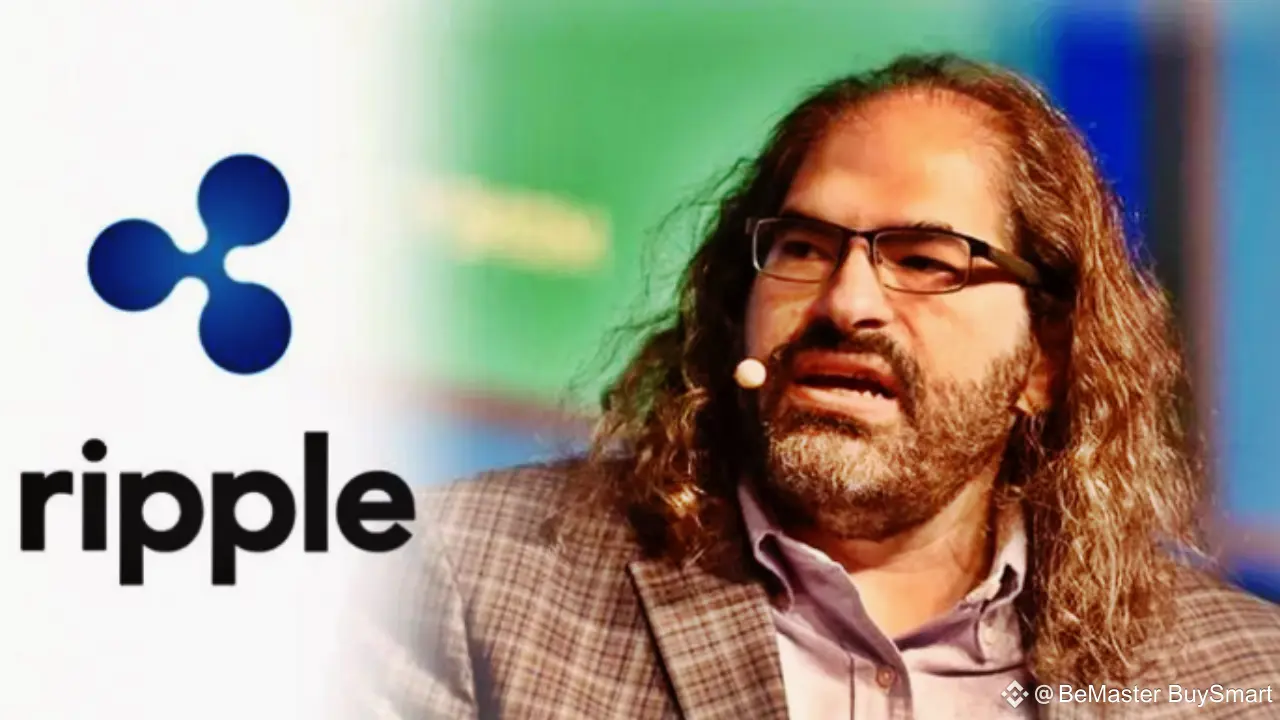
The XRP community has been buzzing with excitement following the latest insights from Stern Drew, a well-known crypto analyst, who highlighted comments made by Ripple’s Chief Technology Officer, David Schwartz. Drew pointed out that Schwartz’s recent remark, “There is no benefit to the price of XRP remaining low,” sheds light on why the asset is on track for significant price appreciation.
The Impact of Price on XRP’s Efficiency
According to Drew, Schwartz’s reasoning hinges on the relationship between XRP’s price and its liquidity density. When XRP’s price remains low, a larger number of units are needed to facilitate high-value transactions, which creates inefficiencies in the settlement process.
For example, moving $50 million with XRP at $1 requires 50 million units, but at $10,000 per XRP, only 5,000 units are needed. This reduction in unit movement improves liquidity, reduces slippage, and allows for faster and more efficient global transactions on the XRP Ledger (XRPL).
Also Read: XRP Technology Listed as Settlement Layer Candidate for These Top Global Banks
Schwartz’s focus on XRP’s architecture is also critical. The XRPL is designed with a deterministic monetary policy, fixed supply, and institutional-grade finality, making it well-suited for high-value, low-velocity settlement.
We're back on X.
— 36Crypto (@36Crypto1) August 21, 2026
Our previous account (36crypto2) is currently unavailable while we continue working through the appeal process. In the meantime, this is our new official account. While you are on this page, please support us by sharing and following.
These features align XRP with traditional assets like gold and Special Drawing Rights (SDRs), which have long been used for large-scale financial transactions. By concentrating value into fewer units, the XRPL enhances throughput and stability, facilitating smoother global settlements and preventing liquidity fragmentation.
XRP’s Potential in Global Settlement Systems
Drew emphasizes that XRP’s price must rise to accommodate the growing scale of global settlement. With foreign exchange transactions exceeding $7 trillion daily, and tokenized treasuries expected to surpass $30 trillion, XRP must handle vast sums of value efficiently. A higher price for XRP would better position it to manage this enormous volume, ensuring that the XRPL can facilitate these transactions seamlessly.
Moreover, as the price of XRP increases, its relative volatility decreases, making it more suitable for banking-grade settlements. The higher the value of each XRP unit, the less volatility it experiences as a percentage of total liquidity, which is crucial for institutional use. In this context, predictability becomes more important than speed, and XRP’s price growth would make it a more reliable asset for financial institutions looking for stable settlement options.
In Drew’s view, Schwartz’s analysis underscores that XRP’s functionality improves significantly at higher valuations. As the XRPL thrives at higher price levels, XRP’s potential to revolutionize global financial settlement systems becomes even more evident. A price of $10,000 per XRP is not a distant dream, according to Drew, but rather a target that fits the liquidity needs of the global financial ecosystem, making it a key asset for the future.
Also Read: XRP Technology Listed as Settlement Layer Candidate for These Top Global Banks
