

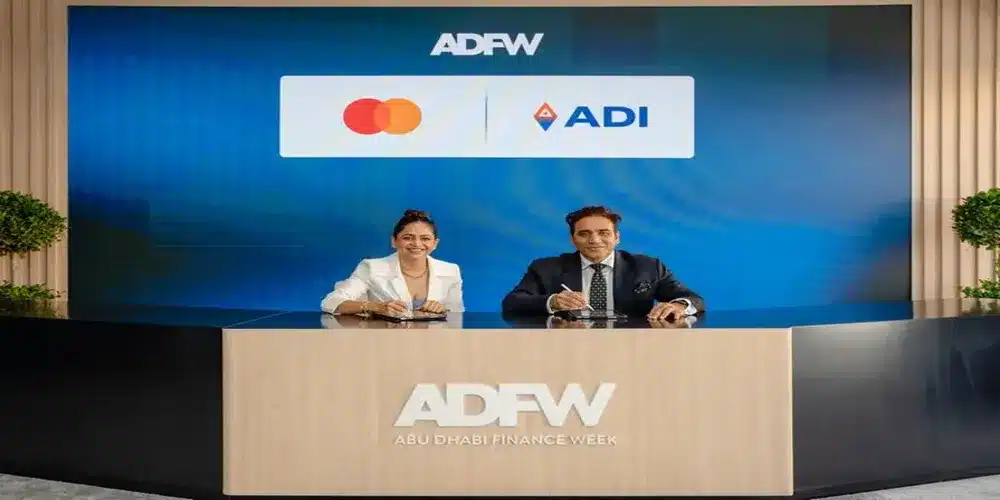
- Mastercard expands digital asset strategy in MENA through ADI Foundation alliance
- Stablecoin settlement and tokenized assets move closer to everyday regional payment flows
- Focus shifts toward compliant, scalable blockchain rails for institutions and businesses
Mastercard has expanded its digital asset strategy in the Middle East through a new alliance announced in Dubai, UAE. According to Mastercard, the company partnered with the ADI Foundation to advance stablecoin settlement and tokenized asset use cases across the region. The collaboration highlights Mastercard’s intent to embed digital assets into everyday payment execution.
According to the announcement, the alliance supports the UAE’s ambition to strengthen its position as a digital asset and blockchain infrastructure hub. Mastercard linked the initiative to faster settlement processes, clearer transaction visibility, and stronger payment resilience. These priorities aim to improve how banks, fintech firms, merchants, and consumers move value across borders.
Additionally, the partnership will begin with stablecoin-based settlement for domestic and cross-border transactions. According to Mastercard, the scope also includes stablecoin-linked payment cards and tokenized real-world asset applications. The companies also plan to support remittance corridors and B2B trade flows using digital assets.
Moreover, Mastercard stated that these use cases promote interoperability across financial systems. According to the company, regulatory compliance and scalable infrastructure remain central to the collaboration. Consequently, the alliance focuses on institution-ready blockchain rails rather than experimental deployments.
Also Read: SBI and Startale Target Global Institutions With Regulated Yen Stablecoin
Execution and Compliance Drive Mastercard’s Regional Strategy
According to Prakriti Singh, executive vice president for core payments across Eastern Europe, the Middle East, and Africa, Mastercard prioritizes practical outcomes. She explained that the company will work with partners to identify high-impact use cases that improve payment efficiency. Singh also noted that stablecoin-linked and tokenized solutions enable faster and more secure transactions.
We're back on X.
— 36Crypto (@36Crypto1) August 21, 2026
Our previous account (36crypto2) is currently unavailable while we continue working through the appeal process. In the meantime, this is our new official account. While you are on this page, please support us by sharing and following.
However, the strategy reflects broader market expectations. According to Mastercard, financial institutions increasingly require blockchain tools that integrate with existing payment systems. Hence, the partnership emphasizes operational reliability and regulatory alignment across financial ecosystems.
Meanwhile, the ADI Foundation described the collaboration as a step toward broader digital participation. According to Ajay Bhatia, a principal council member at the foundation, the alliance supports building a more inclusive digital economy. He added that the initiative advances the foundation’s goal of onboarding 1 billion people into the digital economy by 2030.
According to Mastercard, the alliance signals how stablecoins now function as payment instruments rather than experimental assets. The company views tokenization and stablecoin settlement as tools that enhance transparency, speed, and trust. As a result, the Middle East has become a key region for Mastercard’s evolving digital asset strategy.
Also Read: Pundit: “The Hidden Pipeline Between BlackRock and Ripple (XRP) Is Now Visible” – Here’s Why
