

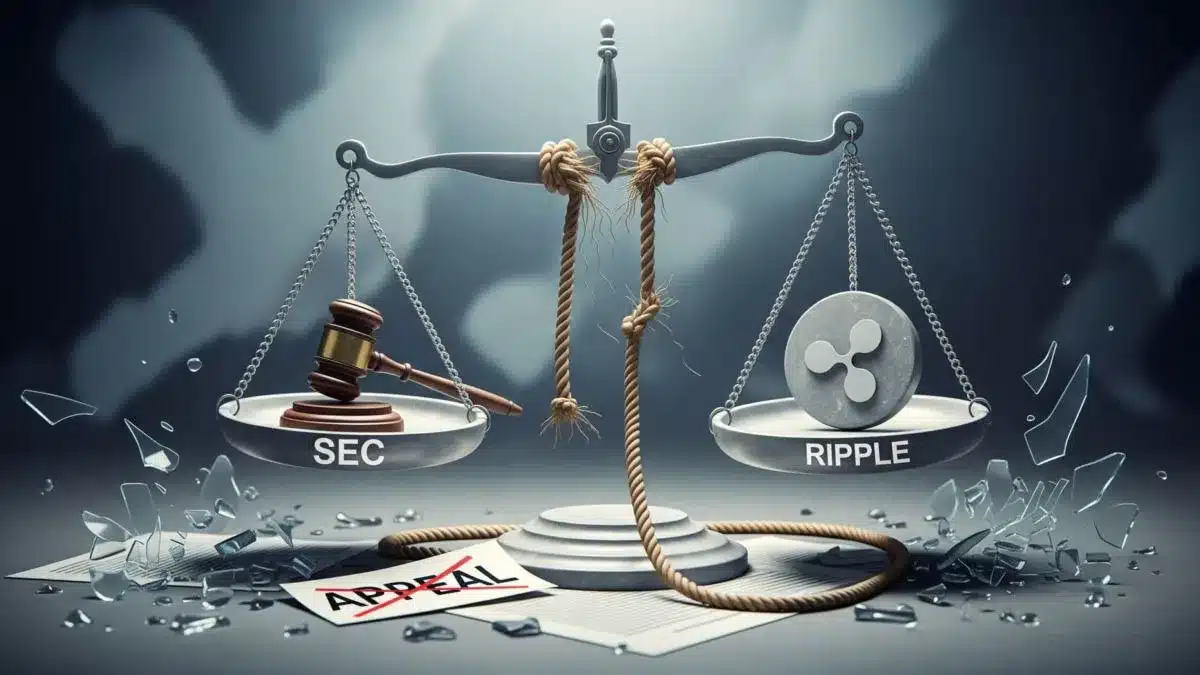
- Skipper XRPL says the SEC’s 2020 lawsuit against Ripple reshaped crypto regulation, triggering years of industry-wide uncertainty.
- A landmark 2023 ruling clarified that XRP sales on public exchanges are not securities, with the case fully resolved in 2025.
- Legal clarity unlocked renewed momentum for XRP, enabling ETFs, institutional inflows, and a stronger position in the U.S. market.
Crypto analyst and pundit Skipper XRPL has reflected on the fifth anniversary of the U.S. Securities and Exchange Commission’s lawsuit against Ripple, a case that evolved into one of the most consequential regulatory battles in cryptocurrency history.
What began as an enforcement action against a single company ultimately influenced market structure, legal clarity, and regulatory expectations across the digital asset sector.
The Shock Start: December 2020
The SEC filed its lawsuit against Ripple in December 2020, during the final days of then-Chair Jay Clayton’s tenure. The market reaction was swift and severe.
XRP’s price fell by roughly 60% within days, while major exchanges such as Coinbase and Bitstamp suspended or delisted XRP trading for U.S.-based users. The case sent shockwaves beyond Ripple itself, as many altcoin investors feared that other projects could face similar enforcement actions under U.S. securities laws.
Ripple’s Decision to Fight
Rather than settling, Ripple chose to contest the charges, arguing that it had never received “fair notice” that XRP could be classified as a security. According to Skipper XRPL, this decision marked the beginning of a prolonged legal battle that drew increasing attention from the broader crypto community.
Also Read: Pundit to XRP Holders: Pay Attention to This, XRP Burn is Real
⚡️Can you believe it’s been 5 years since the SEC sued Ripple?
What started as a threat to one company became crypto’s biggest regulatory battle.
The Shock Start (Dec. 2020)
Filed on Jay Clayton’s last days as SEC chair:
– XRP crashed 60% in days
– Coinbase/Bitstamp… pic.twitter.com/ZEuhGRNXcC
— Skipper | XRPL (@skipper_xrp) December 22, 2025
We're back on X.
— 36Crypto (@36Crypto1) August 21, 2026
Our previous account (36crypto2) is currently unavailable while we continue working through the appeal process. In the meantime, this is our new official account. While you are on this page, please support us by sharing and following.
In 2021, Ripple pushed for access to internal SEC communications related to Ethereum’s regulatory status, a move supported by a vocal and organized XRP community.
The following year, courts ordered the SEC to turn over internal emails, which reportedly revealed disagreement and uncertainty within the agency regarding how digital assets should be classified.
The 2023 Ruling and Continued Appeals
A major turning point came in 2023, when a U.S. court issued a split decision. The ruling determined that XRP sold on public exchanges did not constitute securities transactions, while certain institutional sales did fall under securities laws. Ripple was ordered to pay a $125 million fine related to those institutional sales.
Despite the partial loss, the decision was widely viewed as a landmark moment for the crypto industry. In 2024, however, the SEC filed an appeal, extending legal uncertainty for another year.
Final Resolution in 2025
Skipper XRPL noted that the case reached its conclusion in 2025 following a change in SEC leadership. With a more crypto-friendly regulatory stance, the agency withdrew its appeal. Ripple paid the previously ordered fine, and XRP emerged with clear legal status in the United States.
The resolution effectively closed a chapter that had loomed over the XRP ecosystem for half a decade.
With litigation behind it, Ripple was able to refocus on business development and partnerships. Skipper XRPL noted that the legal clarity paved the way for XRP exchange-traded funds (ETFs), which launched in late 2025.
Since their introduction, XRP ETFs have reportedly surpassed $1.2 billion in total assets under management, signaling renewed institutional interest following years of regulatory uncertainty.
Looking Ahead
Skipper XRPL argues that Ripple’s survival through one of crypto’s most intense regulatory battles sets it apart from many projects that may not have withstood similar pressure.
While his assertion that XRP could be the “best investment in 2026” reflects personal conviction rather than guaranteed outcomes, the conclusion of the SEC case has undeniably reshaped XRP’s position in the U.S. market.
As the industry moves forward, the Ripple case is likely to remain a defining precedent in how digital assets are regulated and litigated in the years to come.
Also Read: Ripple CEO on XRP Institutional Sales Sparks Manipulation Concerns – What He Had to Say
