

What to know:
- Ripple’s past statement resurfaces as XRP community reignites debate
- Garlinghouse’s bold SWIFT claim gains traction amid Ripple expansion
- Ripple’s growth aligns closely with long-term vision outlined years ago
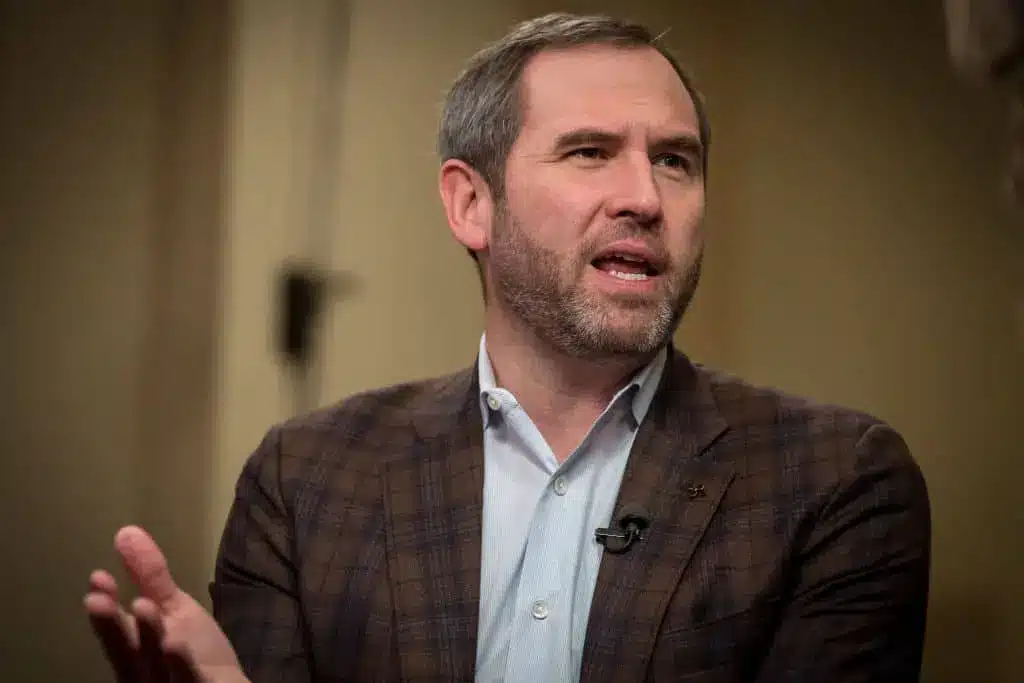
The XRP community witnessed renewed attention after a resurfaced clip of Brad Garlinghouse circulated widely across social platforms, drawing fresh analysis of comments he made years ago. The interview, originally conducted by Bloomberg in 2018, captured a moment where the Ripple CEO stated that the company was effectively “taking over SWIFT” through consistent execution and long-term strategy.
Reacting to the comments, a well-known crypto commentator and XRP advocate, Diana, emphasized that what once appeared to be an ambitious statement now aligns more closely with recent developments. She noted that Ripple has steadily expanded its infrastructure, strengthening its role within global financial systems.
Resurfaced Interview Gains Relevance as Ripple Expands Globally
During the 2018 discussion, Garlinghouse explained that Ripple focused on improving how banks handle cross-border transactions by addressing inefficiencies in traditional systems. He pointed out that networks such as SWIFT had not evolved quickly enough to meet modern financial demands, creating an opportunity for blockchain-based solutions.
At the time, these remarks generated mixed reactions, with some observers questioning whether such a transition could realistically occur. However, according to Diana, Ripple’s continued growth and execution have gradually shifted that perception, as more institutions explore alternative settlement methods.
Also Read: ‘XRP Is Not for You If You Can’t Handle an 80% Correction Before a Major Upside’: Top Analyst
We're back on X.
— 36Crypto (@36Crypto1) August 21, 2026
Our previous account (36crypto2) is currently unavailable while we continue working through the appeal process. In the meantime, this is our new official account. While you are on this page, please support us by sharing and following.
Moreover, Garlinghouse clarified that Ripple’s goal was not to replace banks but to support them with better tools. He highlighted that blockchain technology could significantly improve transaction speed and liquidity efficiency, which remain critical factors in global payments.
Reality in 2026: Institutional Growth and Strategic Expansion Strengthen Ripple’s Position
Fast forward to 2026, Ripple has expanded its On-Demand Liquidity services across multiple regions, allowing financial institutions to process transactions without maintaining pre-funded accounts. As a result, banks have gained access to faster settlement processes while reducing operational costs.
Furthermore, Ripple reported processing over $100 billion in transaction volume, reflecting growing adoption among institutions seeking efficient payment infrastructure. The company also introduced RLUSD to provide regulated liquidity, supporting its broader financial ecosystem.
Notably, Ripple strengthened its institutional presence through acquisitions, including GTreasury, which enhanced its treasury management capabilities. Following this development, Ripple Treasury joined the SWIFT Certified Partner Program, positioning the firm within existing financial networks.
Additionally, Ripple has pursued regulatory alignment in the United States, receiving conditional approval for a national trust bank charter. This step reflects its intention to operate more closely within established financial systems. As Diana noted, Ripple didn’t abandon the SWIFT thesis; rather, it spent 8 years building it.
The resurfaced Bloomberg interview has renewed focus on Ripple’s long-term strategy, highlighting how its steady expansion continues to align with earlier ambitions.
Also Read: Safe (SAFE) Price Prediction 2026–2030: Can SAFE Hit $0.15 Soon?
