
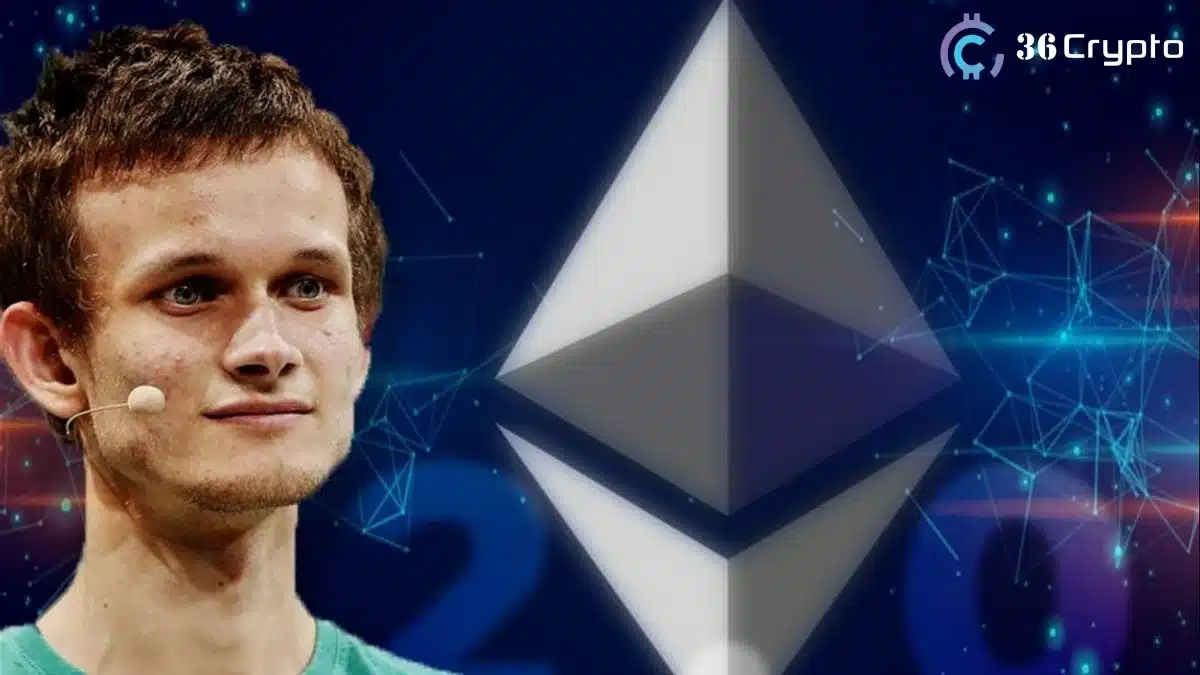
- Ethereum targets 100-year security through early adoption of quantum-resistant cryptography
- Protocol maturity focuses on scalability, decentralization, and reduced reliance on frequent upgrades
- Vitalik Buterin pushes long-term stability over short-term efficiency trade-offs
Ethereum’s long-term roadmap gained renewed attention after comments from its co-founder clarified network maturity, as Vitalik Buterin said the protocol must function without constant developer involvement. Market reaction remained muted with ETH down 0.10%, while attention quickly shifted from short-term price movement to long-term protocol resilience.
According to Buterin, Ethereum should consider ossification only after meeting seven strict technical benchmarks designed to keep the network stable for decades. At the center of this framework sits quantum resistance, which he described as mandatory to ensure Ethereum’s base layer remains cryptographically secure for 100 years.
Significantly, he warned against delaying quantum readiness for efficiency gains, stressing that protocol decisions must favor long-term safety over short-term optimization.
Also Read: 21Shares Secures Approval to List Spot Dogecoin ETF Under TDOG Ticker
Quantum Readiness Becomes a Core Measure of Maturity
Buterin position mirrors broader trends within the ecosystem, as the Ethereum Foundation has already supported initiatives focused on post-quantum security. That support includes backing for ZKNox, a startup developing open-source cryptographic tools aimed at strengthening Ethereum’s defenses, highlighting growing concern over future computational threats.
Beyond cryptography, Buterin emphasized that maturity also depends on Ethereum’s ability to scale reliably, noting that the network must process thousands of transactions per second without compromising decentralization. He pointed to ZK-EVM validation and PeerDAS as critical components of this scaling strategy, as these systems aim to increase throughput while maintaining security guarantees.
Scalability and State Management Shape Long-Term Reliability
Moreover, long-term state management featured prominently in his outline, with statelessness and state expiry positioned as tools for sustaining the network over decades. He explained that unchecked state growth could create maintenance challenges for future operators, while durable design would keep Ethereum accessible to a broad validator set.
Furthermore, he called for a fully abstracted account model that moves beyond ECDSA limitations to improve flexibility in account security and design. Gas mechanics also require refinement within the maturity framework, as Ethereum needs a denial-of-service-resistant gas schedule that remains predictable for users.
Economic and Governance Stability Complete the Framework
Economic design received equal attention in the roadmap, as Buterin stressed that the proof-of-stake model must keep evolving to preserve decentralization incentives over time. He also highlighted the importance of censorship-resistant block production, noting that limiting centralized influence in block building remains essential for Ethereum’s neutrality.
To manage these changes, Buterin advocated a staged development approach, explaining that developers should complete at least one major requirement each year where feasible. He further suggested that future updates rely more on parameter adjustments than frequent hard forks, a method aimed at reducing disruption while preserving flexibility.
Taken together, the remarks redefine Ethereum’s long-term priorities, with network maturity now centered on durability, restraint, and long-term readiness. The outlined path signals a shift toward infrastructure designed to outlast rapid innovation cycles, placing Ethereum’s future credibility on preparation rather than constant active stewardship.
Also Read: Many Bitcoin Maxis Will Rotate Into XRP This Cycle – Here’s Why
