


What to Know
- Ethereum’s Liquidity Shock Z-Score on Binance dropped to -1.00, marking its lowest level in nearly seven months amid weakening activity.
- CryptoQuant analyst Arab Chain highlighted declining Binance ETH reserves, suggesting reduced exchange holdings and potential transfers into external investor wallets.
- Falling liquidity activity does not confirm increased selling pressure, as the indicator measures exchange liquidity changes rather than Ethereum’s direction.
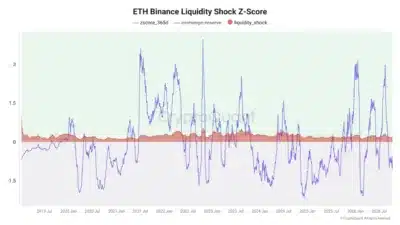
Ethereum’s Liquidity Shock Z-Score on Binance has dropped to approximately -1.00, marking its lowest reading in nearly seven months. According to CryptoQuant analyst Arab Chain, the decline coincides with falling ETH reserves on Binance, indicating reduced liquidity activity on the exchange.
The latest reading represents a significant change in Ethereum’s liquidity conditions compared with earlier periods in 2026. The indicator measures deviations in liquidity activity from historical averages, helping identify unusual changes in exchange liquidity.
A negative Z-Score indicates that liquidity activity has fallen below its average level during the reference period. In this case, the reading near -1.00 reflects a considerable reduction in Ethereum liquidity activity on Binance.
Earlier in 2026, the indicator recorded elevated positive readings before experiencing a substantial decline in February. Liquidity activity subsequently recovered over the following months, with another increase emerging during the summer.
October’s decline has reversed that recovery, bringing the indicator to levels not recorded for nearly seven months. This movement highlights changing liquidity conditions within Binance’s Ethereum market.
We're back on X.
— 36Crypto (@36Crypto1) August 21, 2026
Our previous account (36crypto2) is currently unavailable while we continue working through the appeal process. In the meantime, this is our new official account. While you are on this page, please support us by sharing and following.
Also Read: Breaking: Standard Chartered Launches Ripple RLUSD Custody for Institutional Use
Binance Ethereum Reserves Decline Alongside Liquidity Indicator
Arab Chain also highlighted a decline in Ethereum reserves on Binance, coinciding with the negative Liquidity Shock Z-Score reading. The simultaneous movements suggest that exchange-held ETH balances have decreased alongside broader liquidity activity.
Falling exchange reserves can indicate that investors are transferring Ethereum from trading platforms into external wallets. Such transfers reduce the amount of ETH held directly on exchanges and potentially available for immediate trading.
Additionally, lower exchange balances may reflect changes in investor custody preferences rather than direct selling activity. Investors sometimes withdraw assets for long-term storage, staking, or transfers between different custody arrangements.
Source: CryptoQuant
The relationship between declining reserves and liquidity activity provides further context for Ethereum’s changing exchange conditions. Still, neither indicator independently establishes whether buying or selling pressure currently dominates the market.
Significantly, the Liquidity Shock Z-Score tracks changes in liquidity dynamics rather than predicting Ethereum’s price direction. Its negative reading therefore does not automatically indicate increased selling pressure or an impending price decline.
The latest figures instead show that Binance’s Ethereum liquidity activity has moved below its historical reference average. Meanwhile, declining reserves suggest that fewer ETH tokens remain within the exchange’s custody.
Conclusion
Ethereum’s seven-month liquidity indicator low and declining Binance reserves highlight measurable changes in exchange activity. The combined data points to reduced liquidity without establishing a definite direction for Ethereum’s price.
Also Read: AI Stock Rally Sends S&P 500 and Nasdaq to Records as Onchain Equity Access Expands
