

Summary
- Cardano founder Charles Hoskinson believes artificial intelligence has exceeded expectations by independently producing and formally verifying increasingly complex mathematical proofs.
- The Navier-Stokes controversy highlights AI’s growing reasoning abilities and its potential influence across mathematics, engineering, fluid dynamics, and modern physics.
- Hoskinson also warned that centralized AI platforms could expose confidential research, strengthening arguments for private systems protecting intellectual property rights.
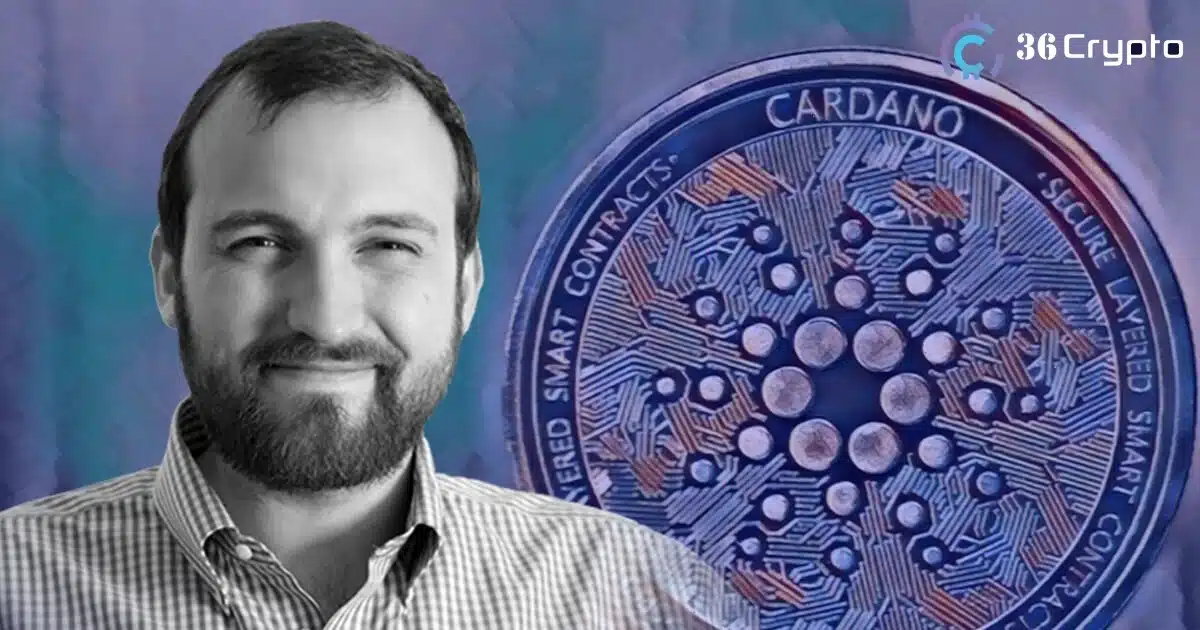
Cardano founder Charles Hoskinson believes artificial intelligence has developed mathematical abilities far beyond his expectations across numerous research fields. According to Hoskinson, researchers expected formal systems primarily to improve cooperation among mathematicians handling complicated problems.
However, large language models have moved beyond assistance and can potentially write and formally verify sophisticated mathematical proofs. “We never anticipated the extent to which AI would come in,” Hoskinson explained during a recent YouTube broadcast.
He previously believed automated tools would help specialists examine proofs, identify mistakes, and coordinate demanding academic projects. Nevertheless, expecting artificial intelligence to produce an entire proof once appeared unrealistic, even among developers of formal systems.
“The idea of the AI itself would fully write the proof, it was pretty far out,” he remarked.
Furthermore, Hoskinson credited large language models with changing his understanding of what automated systems could accomplish within mathematical research.
We're back on X.
— 36Crypto (@36Crypto1) August 21, 2026
Our previous account (36crypto2) is currently unavailable while we continue working through the appeal process. In the meantime, this is our new official account. While you are on this page, please support us by sharing and following.
Also Read: 21Shares Shatters XRP’s Biggest Myth About Ripple’s Control of the XRP Ledger
Navier-Stokes Debate Highlights AI’s Expanding Mathematical Capabilities
Hoskinson’s comments addressed reported claims involving an AI-generated approach to the Navier-Stokes existence and smoothness problem. This unresolved challenge is one of the Clay Mathematics Institute’s Millennium Prize Problems and carries a $1 million reward.
It examines whether well-behaved solutions always exist for equations describing fluid movement within three-dimensional environments. Solving the problem could significantly influence mathematics, fluid dynamics, aerospace engineering, mechanical engineering, and several branches of physics.
Therefore, Hoskinson argued that a verified AI-generated solution could transform established ideas about mathematical discovery and machine intelligence. “For OpenAI to claim that they have solved this, this would fundamentally change the mathematics paradigm,” he explained.
However, Hoskinson questioned the work’s provenance and raised concerns about confidential research submitted to centralized artificial intelligence providers. Moreover, Hoskinson warned academics and entrepreneurs that sharing proprietary material with cloud-based models could weaken control over intellectual property.
His warning supported the use of private AI environments where researchers could examine sensitive theories without exposing unpublished work or valuable technical information. Despite questioning the reported approach’s origins, Hoskinson acknowledged that the artificial intelligence system demonstrated impressive mathematical capabilities.
Also Read: Breaking: DDSC and Network International Launch UAE’s First In-Store Stablecoin Payment Pilot
