
Key Takeaways
- Crypto wallets and centralized exchanges provide different approaches to managing digital assets, particularly regarding private key ownership and transaction control.
- Trading fees, withdrawal charges, network costs, and execution methods influence the overall expenses associated with cryptocurrency wallets and exchange platforms.
- Self-custody wallets offer direct asset control, while centralized exchanges provide account recovery services alongside additional custody and operational risks.
Cryptocurrency wallets and exchanges allow users to buy, sell, transfer, and manage digital assets, although their custody arrangements and operational procedures differ significantly. Understanding these differences helps investors evaluate transaction costs, security responsibilities, and recovery options.
Centralized exchanges manage customers’ private keys, while self-custody wallets allow individuals to authorize blockchain transactions independently. Both provide useful features, but their suitability depends on individual requirements.
Also Read: Ryan VanGrack: Early Life and Net Worth – The Coinbase Executive Shaping Crypto Policy
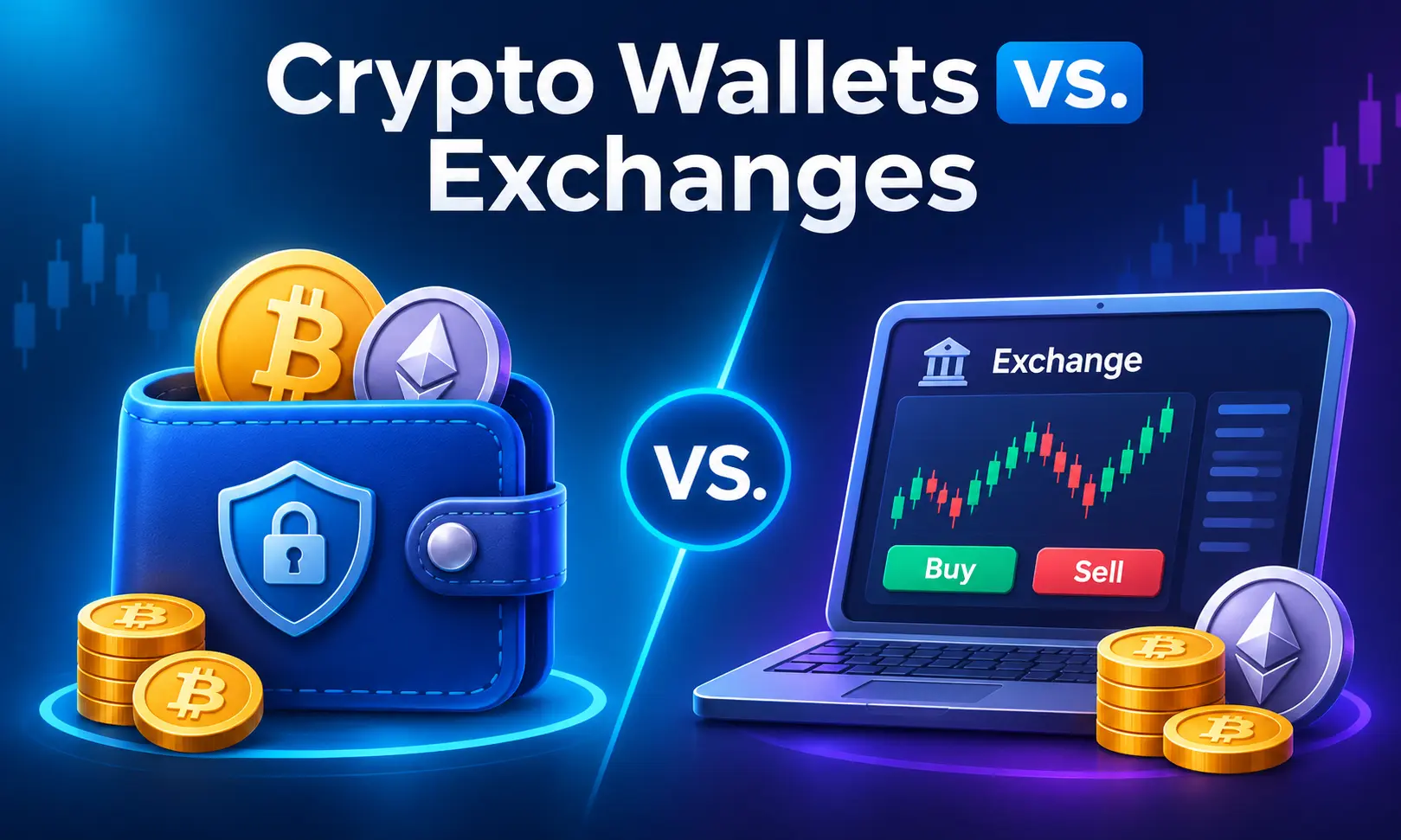
What Is the Difference Between a Crypto Wallet and an Exchange?
A cryptocurrency wallet enables users to access digital assets recorded on blockchain networks. Self-custody wallets provide control over private keys, allowing individuals to authorize transactions without relying on centralized custodians.
Centralized exchanges operate differently by managing private keys and maintaining customer balances within their systems. Users execute trades and request withdrawals through platform-controlled processes.
We're back on X.
— 36Crypto (@36Crypto1) August 21, 2026
Our previous account (36crypto2) is currently unavailable while we continue working through the appeal process. In the meantime, this is our new official account. While you are on this page, please support us by sharing and following.
Atomic Wallet, for example, provides self-custody functionality, allowing users to manage supported cryptocurrencies while controlling their recovery credentials. The main distinction concerns who controls the assets and assumes responsibility for securing access.
How Do Crypto Wallets and Exchanges Handle Trading?
Centralized exchanges commonly use order books containing available buy and sell orders. Market orders execute against existing liquidity, while limit orders establish acceptable execution prices. Market orders may experience slippage, whereas limit orders can remain unfilled when prices fail to meet specified conditions.
Self-custody wallets can facilitate trading through integrated third-party providers. Atomic Wallet connects users with swap services that provide quotations and transaction addresses.
Users review exchange terms before authorizing transfers, while providers process cryptocurrency conversions. Atomic Wallet also documents perpetual futures trading through Hyperliquid, providing exposure to cryptocurrency price movements without ownership of the underlying assets.
Comparing Cryptocurrency Wallet and Exchange Fees
Transaction expenses vary depending on the platform, cryptocurrency, and selected blockchain network. Centralized exchanges may charge trading commissions, spreads, and withdrawal fees. Transferring purchased cryptocurrency into personal wallets can therefore introduce additional expenses.
Wallet-based swaps may involve provider charges and network transaction fees. Cryptocurrency purchases using payment cards can also attract processing costs.
Some providers incorporate fees into quoted exchange rates, making the final amount received an important comparison. Users should evaluate total transaction expenses rather than relying exclusively on advertised trading fees.
How Do Crypto Wallets and Exchanges Handle Account Recovery?
Centralized exchanges generally provide account recovery through identity verification, security procedures, and customer support. However, restoring account access does not necessarily guarantee immediate withdrawals because security reviews and temporary restrictions may apply.
Self-custody wallets require users to preserve their recovery information independently. Atomic Wallet allows users to restore access using a 12-word backup phrase when an application password is forgotten.
Losing both wallet access and the recovery phrase can permanently prevent access to cryptocurrency holdings. Support teams cannot recreate missing private keys. Additionally, recovering an account or wallet does not reverse completed blockchain transactions.
What Are the Security Risks of Crypto Wallets and Exchanges?
Centralized exchanges expose users to custody failures, operational disruptions, unauthorized account access, and withdrawal restrictions. Strong authentication can reduce account-related threats, although platform-level risks remain.
Self-custody wallets introduce different vulnerabilities, including compromised devices, stolen recovery phrases, malware infections, and malicious transaction approvals.
Integrated trading services may also expose users to third-party operational and technical risks. Consequently, controlling private keys does not eliminate every security threat associated with cryptocurrency management.
How to Transfer Crypto Between an Exchange and a Wallet
Cryptocurrency transfers require accurate receiving addresses and compatible blockchain networks. Users transferring assets from centralized exchanges to Atomic Wallet must confirm that the wallet supports the selected cryptocurrency and withdrawal network.
Some assets also require destination memos or tags for successful processing. A matching cryptocurrency ticker does not automatically establish network compatibility.
Withdrawal charges and minimum transaction amounts should also be checked before initiating transfers. A small test transaction can help verify transfer details before sending larger amounts.
Which Is Better: A Crypto Wallet or an Exchange?
Choosing between a cryptocurrency wallet and an exchange depends on trading requirements, security preferences, and custody responsibilities. Centralized exchanges may suit users requiring fiat payment connections, advanced trading tools, and account recovery services.
Self-custody wallets provide direct control over private keys and blockchain transfers. Atomic Wallet combines self-custody with supported swaps, transfers, and staking services. Users can also combine both options, trading through exchanges while maintaining selected holdings in personal wallets.
Conclusion
Cryptocurrency wallets and centralized exchanges offer different approaches to managing digital assets. Their primary differences involve private key control, trading execution, transaction expenses, and recovery procedures. Understanding these distinctions helps users select appropriate services while managing custody responsibilities and security risks.
FAQs
1. Can I use a cryptocurrency wallet without an exchange?
Yes. Self-custody wallets support direct cryptocurrency transfers without requiring centralized exchange accounts.
2. Does buying cryptocurrency through a wallet require KYC?
Requirements depend on the provider. Atomic Wallet creation does not require KYC, although its documented Simplex card purchases involve identity verification.
3. Is a cryptocurrency wallet safer than an exchange?
Neither is automatically safer. Wallets require personal key protection, while exchanges introduce custody and platform risks.
4. Can I transfer cryptocurrency from an exchange to Atomic Wallet?
Yes, provided the cryptocurrency and selected blockchain network are supported.
5. What happens if I lose my recovery phrase?
Losing the recovery phrase and wallet access can permanently prevent the restoration of cryptocurrency holdings.
Also Read: Coinbase Announces November Crypto Delistings, Issues Warning on Solana Token
