


What to know:
- XRP wallet activity on Binance shifted from 26,200 net depositing wallets to -6,210 within 23 days, marking the exchange’s first negative reading since July 2025.
- The exchange recorded the deepest withdrawal imbalance among major exchanges, while Coinbase, Upbit, and others remained positive or near neutral.
- The latest data tracks wallet participation instead of XRP volume, suggesting reduced exchange-bound activity and growing self-custody without confirming whale accumulation.
CryptoQuant analyst Amr Taha has identified a significant shift in XRP wallet activity on Binance, revealing that the exchange has recorded its first negative seven-day net wallet flow in nearly one year.
According to Taha, the latest on-chain data shows that withdrawing wallets now outnumber depositing wallets, marking a notable change in how XRP holders are using the world’s largest cryptocurrency exchange.
According to the analyst, Binance’s seven-day net depositing and withdrawing wallet count dropped from 26,200 on June 7 to -6,210 by June 30. The reversal represents a swing of 32,410 wallets within just 23 days and has intensified discussions about what the growing dominance of withdrawals could mean for XRP’s market structure and potential selling pressure.
Binance’s XRP Wallet Flows Record a Historic Reversal
According to Taha, Binance has shifted from a strong deposit environment into one where more wallets are removing XRP than sending it to the exchange. Furthermore, the latest data marks Binance’s first negative seven-day net wallet reading since July 9, 2025, when the metric reached -1,350 wallets.
Compared to that previous low, the current reading of -6,210 wallets is approximately 4.6 times deeper, making it the strongest withdrawal imbalance recorded during the past year. The chart also shows Binance standing apart from other leading exchanges, which continue to post positive or near-neutral wallet flow readings.
We're back on X.
— 36Crypto (@36Crypto1) August 21, 2026
Our previous account (36crypto2) is currently unavailable while we continue working through the appeal process. In the meantime, this is our new official account. While you are on this page, please support us by sharing and following.
Also Read: Trump Defends Family Crypto Businesses Amid $1.4 Billion Financial Disclosure
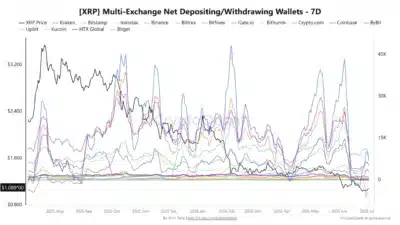
Source: CryptoQuant
Importantly, the metric measures the number of wallets depositing and withdrawing XRP over a rolling seven-day period. Therefore, it reflects changes in user participation instead of the volume of XRP transferred between wallets and exchanges.
Binance Records Fewer Deposits: What this Means
The broader data suggests that fewer wallets are moving XRP onto exchanges across the market. However, Binance remains the clearest example of this shift, with withdrawal activity now exceeding deposits by a wide margin.
Meanwhile, major exchanges such as Coinbase and Upbit continue recording relatively strong wallet activity while remaining above zero. Additionally, several other trading platforms have seen their net wallet readings move closer to neutral, indicating that exchange deposits have generally slowed.
The growing preference for withdrawals may suggest that more XRP holders are transferring assets into private wallets or long-term custody instead of preparing them for immediate trading.
Even so, Taha stressed that the data should not be viewed as evidence of whale accumulation because it tracks wallet numbers rather than XRP balances. As a result, the data highlights changing exchange behavior but cannot independently confirm whether large investors are increasing their holdings.
Conclusion
Binance’s return to negative net XRP wallet flows marks a significant change in exchange activity after nearly one year. The latest data indicates that more users are moving XRP away from the exchange, making Binance the strongest example of the broader decline in exchange-bound wallet activity.
Also Read: Binance Ethereum Withdrawals Reach Three-Year High as ETH Eyes Recovery
