

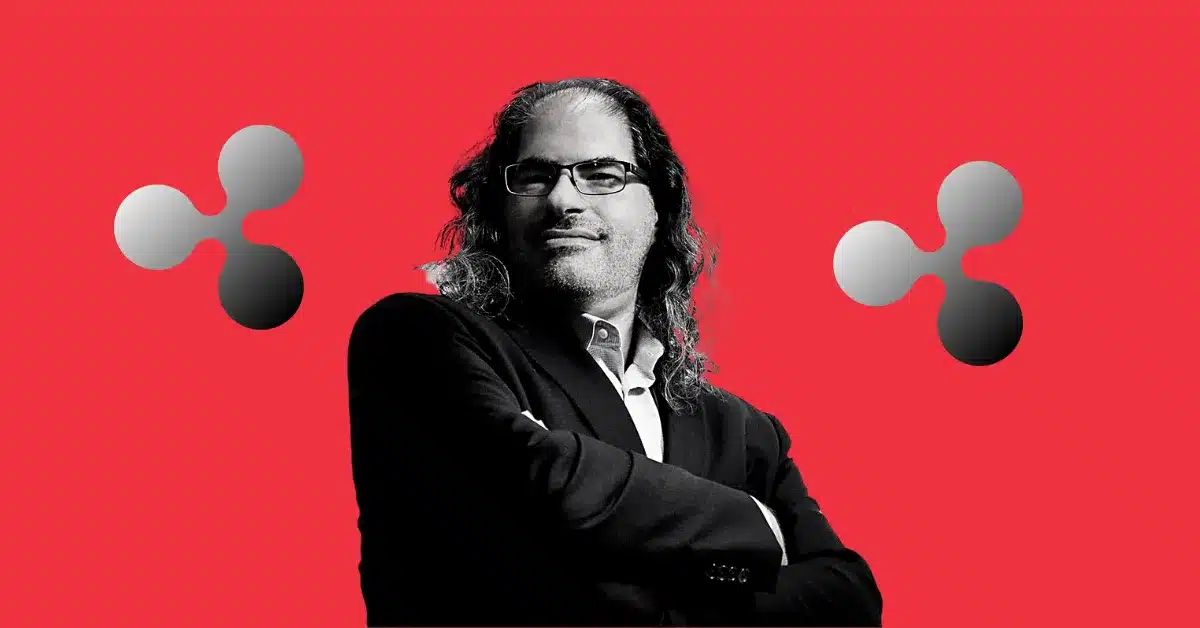
- Ripple CTO Emeritus David Schwartz rejected claims that higher blockchain fees indicate stronger networks, defending XRP’s low-cost payment design philosophy.
- According to an X post, renewed debate questioned XRP’s utility, while Schwartz argued affordable transactions remain a practical competitive advantage.
- The discussion reignited broader disagreements over blockchain value, with supporters prioritizing efficiency and critics linking higher fees to stronger demand.
Ripple CTO Emeritus David Schwartz has rejected claims that blockchain networks become stronger simply because users pay higher transaction fees. According to Schwartz, measuring a network’s value through expensive transactions reflects a misunderstanding of what blockchain technology should achieve.
His remarks came in response to an X post that revived a 2024 discussion surrounding Ripple’s original vision for XRP. According to the X user, the earlier conversation referenced a Forbes article describing how Ripple’s founders envisioned XRP as a fast and affordable payment solution.
Also Read: Peter Schiff Says Bitcoin Bottom Is Zero as Bearish Prediction Returns
Schwartz Defends XRP’s Low-Fee Philosophy
According to the X post, Ripple co-founders Jed McCaleb, Arthur Britto, and David Schwartz designed XRP to reduce the cost of moving value across borders. However, the post also questioned whether XRP has generated enough real-world utility relative to its market valuation.
Moreover, the post argued that blockchain networks collecting higher transaction fees may demonstrate stronger demand because users continue paying those costs. It suggested that XRP’s low-fee model could be viewed as a weakness instead of an advantage.
We're back on X.
— 36Crypto (@36Crypto1) August 21, 2026
Our previous account (36crypto2) is currently unavailable while we continue working through the appeal process. In the meantime, this is our new official account. While you are on this page, please support us by sharing and following.
Schwartz disagreed with that interpretation. According to his response on X, the belief that higher fees signal a healthier blockchain ecosystem is “truly bizarre.” He maintained that expensive transactions should not become a standard for evaluating the success of a crypto network.
Additionally, Schwartz stressed that XRP’s low fees reflect the network’s intended purpose. The XRP Ledger was built to settle payments quickly while keeping transaction costs low for users and businesses.
Besides, lower fees allow users to transfer value without facing unnecessary costs. That design aligns with Ripple’s long-standing objective of improving payment efficiency rather than creating fee-heavy network activity.
Debate Over XRP Utility Returns
The resurfaced discussion also renewed questions about XRP’s overall utility. While the X post did not directly criticize Ripple, it suggested that XRP’s market value appears high when compared with network fees and transaction activity. Consequently, the discussion generated mixed reactions across the XRP community. Some participants argued that higher fees often accompany greater blockchain usage. Others supported Schwartz’s position that affordability should remain a competitive advantage instead of becoming a point of criticism.
Moreover, supporters noted that payment-focused blockchains should prioritize speed, reliability, and low costs. They argued those qualities encourage wider adoption among consumers and businesses. Meanwhile, critics maintained that stronger economic activity often results in higher network fees, making fee generation an indicator of demand. Schwartz rejected that view and reiterated that making transactions more expensive does not improve the underlying value of a blockchain.
Schwartz’s response reinforces Ripple’s long-standing position that low transaction costs remain one of the XRP Ledger’s core strengths. His comments also renewed debate over whether blockchain success should be measured by network efficiency or by the amount users pay in transaction fees.
Also Read: Robinhood Expands Crypto Earn With Morpho as Standard Chartered Starts Coverage
