

In brief:
- S&P Dow Jones Indices and Pantera Capital launched an 18-asset crypto benchmark using protocol revenue instead of market capitalization metrics.
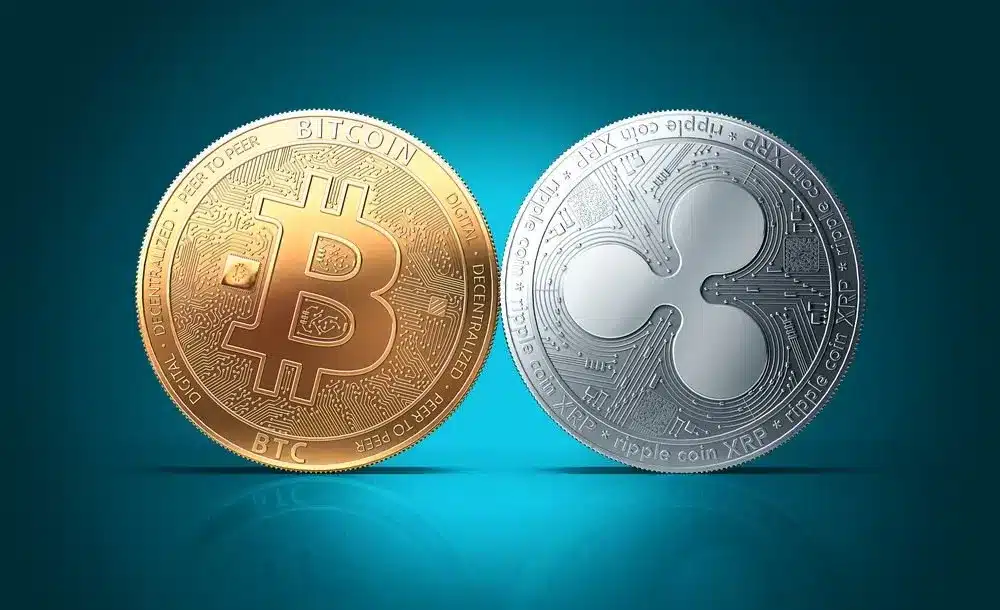
- Tokens like Bitcoin and XRP failed eligibility because neither generates protocol revenue despite meeting significant market capitalization thresholds.
- The benchmark rebalances quarterly, caps constituent weightings, and provides institutional investors with a revenue-focused reference instead of an investment fund.
Bitcoin and XRP were excluded from the newly launched S&P Pantera Digital Asset Index because neither cryptocurrency met the benchmark’s protocol revenue requirement. In her latest CNBC interview, S&P Dow Jones Indices CEO Cathy Clay explained that the index evaluates blockchain networks using financial and operational standards, with revenue generation serving as one of its key eligibility requirements.
New S&P crypto index introduces a different benchmark
S&P Dow Jones Indices launched the S&P Pantera Digital Asset Index in partnership with Pantera Capital as a new benchmark for digital assets. Rather than ranking cryptocurrencies by market capitalization alone, the index measures blockchain networks using protocol revenue alongside other institutional investment criteria.
The benchmark currently tracks 18 digital assets, with Ethereum, BNB, Solana, Tron, and Hyperliquid representing its five largest constituents. It is structured as a market capitalization-weighted benchmark instead of an investment fund, meaning it serves as a reference for investors rather than directly holding cryptocurrencies.
Also Read: Alert: Major XRP Exchange Metric Hits 5 Month Low on Binance – What it Means for Price
We're back on X.
— 36Crypto (@36Crypto1) August 21, 2026
Our previous account (36crypto2) is currently unavailable while we continue working through the appeal process. In the meantime, this is our new official account. While you are on this page, please support us by sharing and following.
Additionally, the index applies diversification limits across its holdings. The largest constituent cannot exceed 35% of the benchmark, while every remaining asset is capped at 20%. S&P also confirmed that the index will rebalance every quarter to keep its allocations aligned with the methodology.
Cathy Clay explains why Bitcoin and XRP were excluded
During the CNBC interview, Clay explained that S&P applied principles similar to those used in its equity indices when designing the benchmark. Eligible digital assets must satisfy several requirements, including a seasoning period, protocol revenue generation, listing standards, and sufficient market liquidity. Bitcoin and XRP did not qualify because neither is a revenue-generating protocol under the benchmark’s methodology.
Moreover, Clay explained that those criteria are intended to identify blockchain networks with measurable economic activity instead of selecting assets solely because of their market value or popularity. That approach differentiates the S&P Pantera Digital Asset Index from benchmarks that simply track the largest cryptocurrencies.
The benchmark is not an exchange-traded fund, and Clay emphasized that it functions as a performance benchmark for investors and asset managers evaluating digital assets through a standardized methodology.
Conclusion
The S&P Pantera Digital Asset Index introduces a different framework for measuring digital assets by emphasizing protocol revenue alongside liquidity, listing standards, and operational maturity.
Cathy Clay’s CNBC interview clarified that assets like Bitcoin and XRP were excluded because they did not satisfy those eligibility requirements, even though both remain among the largest cryptocurrencies by market capitalization.
Also Read: US Targets $25 Million in Crypto Seized From Global Fraud Networks
