

What to know:
- Ripple CEO Brad Garlinghouse criticized Michael Saylor’s Bitcoin strategies, blaming them for the recent crypto market decline.
- Ripple cleared $16 trillion while almost no payments used the XRP Ledger infrastructure.
- Crypto analyst Zach Rector said institutional adoption remains XRP’s biggest catalyst despite regulatory progress.
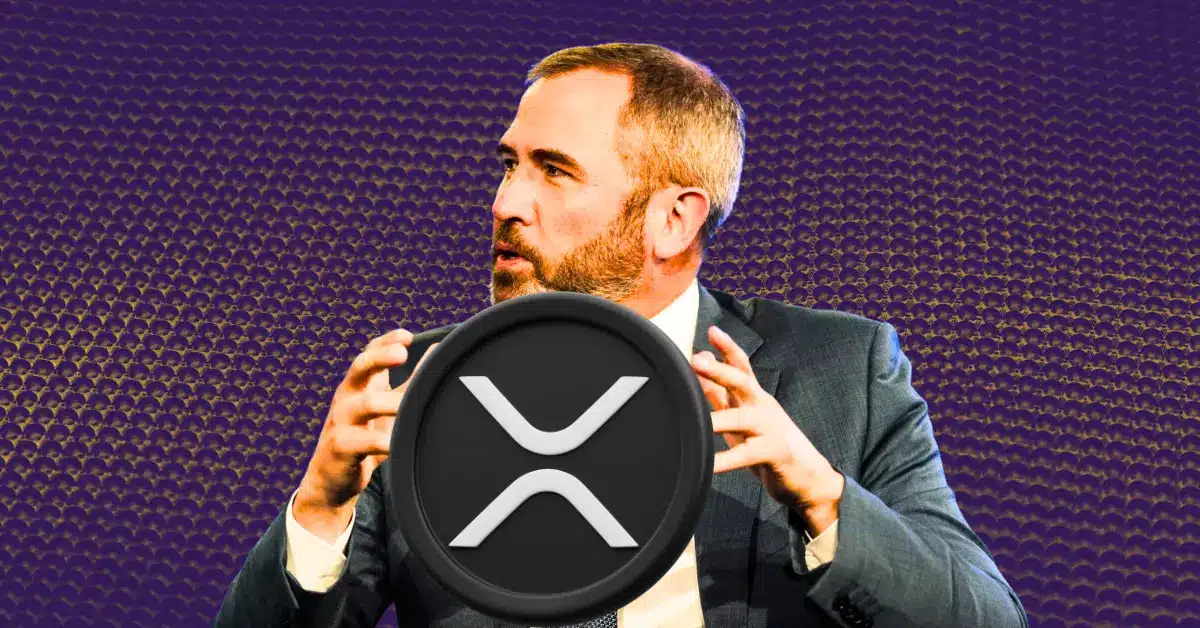
Ripple CEO Brad Garlinghouse has criticized Strategy Executive Chairman Michael Saylor‘s Bitcoin investment approach, saying excessive financial engineering has intensified the recent crypto market downturn. Speaking during a CNBC interview, Garlinghouse argued that long-term value should come from real utility instead of highly leveraged investment strategies.
Garlinghouse said leverage can fuel stronger rallies during bull markets but often deepens losses when markets reverse. He argued that borrowing heavily to acquire more Bitcoin creates additional risks that eventually weigh on the broader digital asset market.
While reaffirming that he remains bullish on Bitcoin, Garlinghouse said Strategy’s model prioritizes financial engineering over creating lasting value. He stressed that sustainable demand comes from blockchain networks solving real-world problems rather than depending on leverage to support prices.
Additionally, Garlinghouse said trust, liquidity, and adoption grow when institutions use blockchain technology for practical financial services. He added that those factors provide a stronger foundation than speculative market activity.
Also Read: UK FCA Finalizes Crypto Framework Ahead of Mandatory 2027 Authorization Regime
Ripple points to utility as the long-term driver
Garlinghouse contrasted his criticism of leveraged investing with Ripple’s own strategy for expanding blockchain adoption. He revealed that Ripple processed approximately $16 trillion in payments and clearing volume last year through its payments business and acquired companies. However, he noted that almost none of those transactions currently settle through the XRP Ledger or digital assets.
We're back on X.
— 36Crypto (@36Crypto1) August 21, 2026
Our previous account (36crypto2) is currently unavailable while we continue working through the appeal process. In the meantime, this is our new official account. While you are on this page, please support us by sharing and following.
Rather than viewing that as a limitation, Garlinghouse described it as Ripple’s largest opportunity. He said the company has spent years building payment infrastructure capable of connecting traditional finance with blockchain technology. According to him, the next step is moving more of those existing payment flows onto blockchain rails as institutional adoption grows.
Zach Rector explains why XRP has yet to benefit
According to market analyst Zach Rector, Garlinghouse’s comments help explain why XRP has not yet reflected Ripple’s growing institutional business. Rector said Ripple already processes trillions of dollars in payment activity, but almost none of that volume currently reaches the XRP Ledger.
Rector added that institutional liquidity remains largely off-chain despite Ripple’s expanding payment network. He argued that this disconnect explains why XRP has yet to experience the level of demand many investors expected. Instead, Ripple continues to prepare the necessary infrastructure before larger financial institutions migrate their payment activity to blockchain settlement.
Regulatory progress could shape Ripple’s next phase
Garlinghouse also linked wider blockchain adoption to regulatory certainty. He explained that clearer rules would give financial institutions greater confidence to integrate blockchain into existing payment systems. Furthermore, he reiterated that Ripple’s goal has always been to modernize financial infrastructure rather than replace it entirely.
In conclusion, Garlinghouse presented Ripple’s utility-focused strategy as an alternative to leverage-driven investment models. His remarks suggested that institutional adoption, rather than financial engineering, will determine the long-term value of XRP and the broader blockchain industry.
Also Read: Bitcoin (BTC) Slips Below $60,000 While Solana (SOL) Leads Major Crypto Gains
