

Key Takeaways
- Layer 1 blockchains are foundational networks such as Bitcoin and Ethereum that independently manage transactions, security, consensus, and blockchain data.
- Layer 2 solutions operate above Layer 1 networks to increase transaction capacity, reduce fees, and improve speeds without overloading base blockchains.
- Bridges allow assets and information to move between blockchain layers, although different designs introduce varying security, decentralization, and trust considerations.]
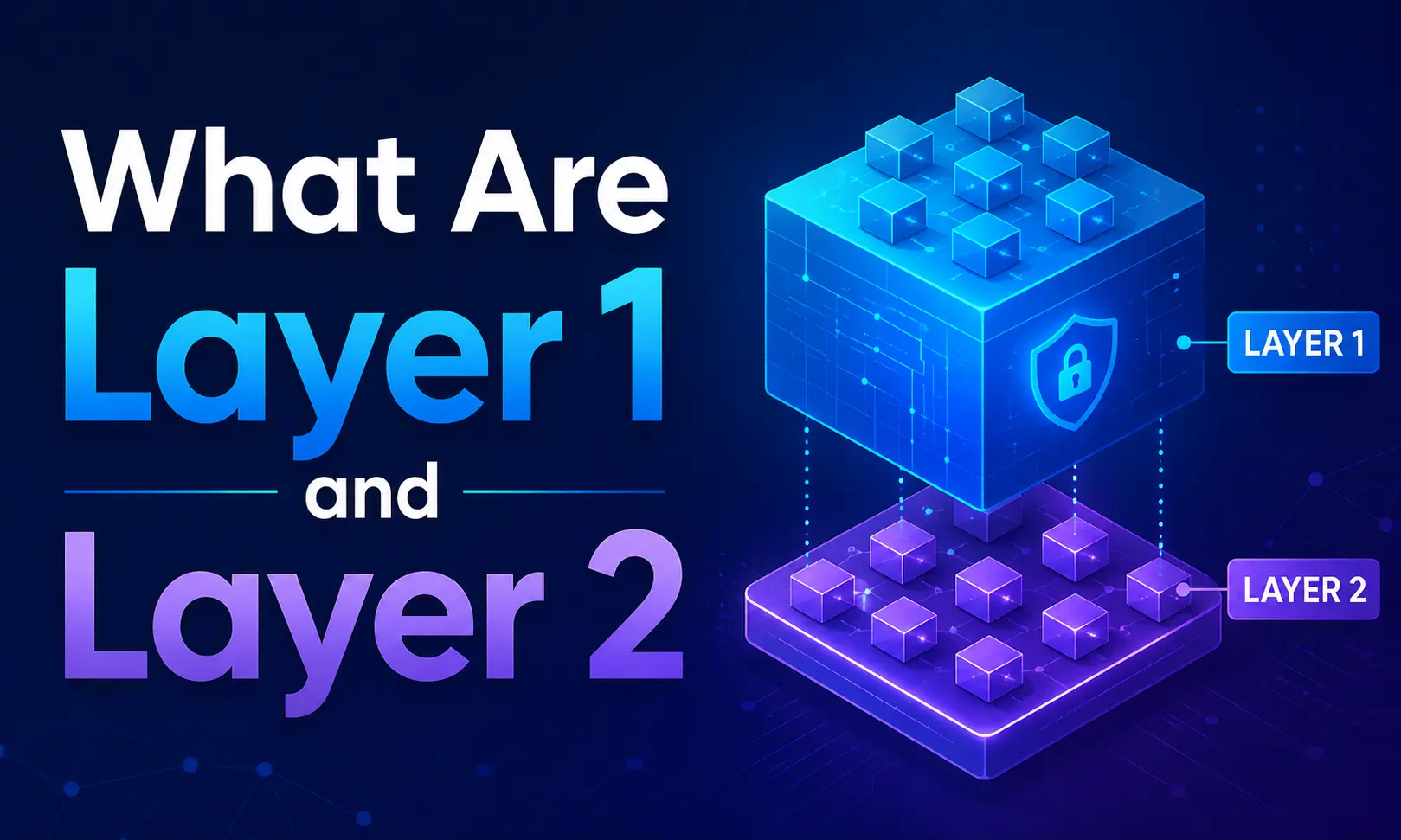
Layer 1 and Layer 2 blockchains represent different parts of blockchain architecture, with each layer performing a distinct role in supporting decentralized networks. Layer 1 provides the underlying infrastructure responsible for processing transactions and maintaining network security, while Layer 2 introduces additional scaling mechanisms designed to improve performance.
Networks including Bitcoin, Ethereum, and Solana operate as Layer 1 blockchains because their protocols maintain their own ledgers and consensus systems. However, growing blockchain adoption can create congestion, slower transactions, and higher costs when activity exceeds the capacity of these base networks.
Layer 2 solutions address these limitations by processing some activity away from the base blockchain while maintaining a connection with Layer 1. Technologies including rollups and state channels can therefore increase transaction throughput while reducing the computational burden placed on the underlying network.
Also Read: Coinbase Wallet: A Complete Guide to the Self-Custody Crypto Wallet
What Is a Layer 1 Blockchain?
A Layer 1 blockchain is the primary network forming the foundation of a decentralized blockchain ecosystem. Bitcoin, Ethereum, and Solana are examples because they operate independent networks responsible for validating transactions, maintaining blockchain records, and enforcing their respective consensus rules.
We're back on X.
— 36Crypto (@36Crypto1) August 21, 2026
Our previous account (36crypto2) is currently unavailable while we continue working through the appeal process. In the meantime, this is our new official account. While you are on this page, please support us by sharing and following.
Consensus mechanisms are particularly important because they determine how network participants agree on valid transactions and the current state of the blockchain. Bitcoin uses proof-of-work, requiring computational resources to validate transactions and produce blocks.
Ethereum, meanwhile, operates using proof-of-stake, where validators participate in securing the network by staking cryptocurrency as collateral. These mechanisms help decentralized participants maintain a shared and tamper-resistant transaction history without depending on a central authority.
Despite providing the core security infrastructure, Layer 1 networks can encounter scalability limitations when transaction demand increases substantially.
How Does Layer 1 Scaling Work?
Layer 1 scaling involves modifying the base blockchain itself to improve its ability to process transactions. Different blockchain networks can use different approaches depending on their architecture and technical requirements.
Increasing block capacity is one possible strategy because larger blocks can contain more transactions. Another approach involves improving consensus mechanisms so transactions can be processed more efficiently without undermining network security.
Sharding represents another potential Layer 1 scaling technique. Instead of requiring the entire network to process the same workload, sharding divides blockchain operations into smaller segments that can process activity in parallel.
However, blockchain developers must consider the relationship between scalability, decentralization, and security when introducing these improvements. Increasing performance without weakening the other characteristics remains an important challenge for Layer 1 networks.
What Is a Layer 2 Blockchain?
Layer 2 refers to scaling infrastructure built above an existing Layer 1 blockchain. Rather than replacing the underlying network, these solutions are designed to increase transaction capacity while leveraging the characteristics of the base blockchain.
Layer 2 solutions have become particularly relevant for blockchain networks experiencing substantial transaction activity. Moving some transaction processing away from Layer 1 can reduce congestion and potentially deliver faster transactions and lower fees.
Several Layer 2 approaches have emerged, including state channels and rollups. State channels allow participants to conduct multiple transactions away from the main blockchain before eventually settling the resulting state on Layer 1.
Rollups take another approach by combining numerous transactions and submitting summarized information to the underlying blockchain. This reduces the amount of data or computation that Layer 1 must directly process for every individual transaction.
What Is the Difference Between Layer 1 and Layer 2?
The primary difference concerns where blockchain activity is processed. Layer 1 is the underlying blockchain responsible for consensus, security, and maintaining the network’s main transaction ledger.
Layer 2 operates above that infrastructure and concentrates primarily on improving scalability and transaction efficiency. Instead of requiring every transaction to be handled entirely by the base blockchain, Layer 2 can process or aggregate activity before interacting with Layer 1.
Consequently, the two layers can complement one another. Layer 1 provides the foundation of the blockchain ecosystem, while Layer 2 expands the amount of activity that can be supported without requiring every transaction to consume the same base-layer resources.
How Do Blockchain Bridges Connect Layer 1 and Layer 2?
Blockchain bridges provide infrastructure for transferring assets and information between Layer 1 and Layer 2 environments. They are particularly important because assets held on a base blockchain may need to move into a Layer 2 ecosystem before users can interact with applications operating there.
Bridges can use different security models. Trustless bridges typically rely on smart contracts and blockchain mechanisms to coordinate transfers without requiring a centralized intermediary, while trusted bridges depend on an entity responsible for overseeing parts of the transfer process.
These designs involve different trade-offs involving security, speed, decentralization, and trust. Bridges consequently play an important role in interoperability but can also introduce additional technical considerations beyond those associated with using a single blockchain.
How Does Bridging From Ethereum to Arbitrum Work?
Moving ether or ERC-20 tokens between Ethereum and Arbitrum provides an example of Layer 1 and Layer 2 interaction. A user seeking to transfer assets can interact with a bridge contract on Ethereum and send the relevant tokens into that contract.
Those tokens are locked on Ethereum, while a corresponding amount becomes available to the user within the Arbitrum ecosystem. The assets can subsequently be used on Arbitrum, where transactions can generally be processed more efficiently than directly on Ethereum’s base layer.
Arbitrum batches transactions and periodically commits information to Ethereum, allowing the Layer 2 network to benefit from the underlying blockchain’s security.
When users want to return their assets to Ethereum, they initiate a withdrawal from Arbitrum. The corresponding Layer 2 assets are locked or removed, and the original assets can eventually be released on Ethereum following the required withdrawal process and challenge period.
What Are the Benefits of Layer 2 Blockchains?
Scalability represents one of the primary advantages of Layer 2 technology. Processing activity outside the base blockchain can substantially increase the number of transactions that an ecosystem can support.
Lower transaction costs represent another potential benefit because Layer 2 systems can distribute base-layer settlement expenses across multiple transactions. This can make blockchain applications more practical for users conducting frequent or relatively small transactions.
Layer 2 networks can also improve user experiences by reducing transaction delays during periods when the underlying blockchain experiences heavy demand.
These capabilities are increasingly relevant for decentralized applications, including decentralized finance platforms and NFT ecosystems, where users may perform numerous blockchain transactions.
What Are the Potential Risks of Layer 2 Blockchains?
Layer 2 networks introduce additional complexity because users interact with infrastructure beyond the underlying blockchain. The security characteristics of a particular solution therefore depend partly on its architecture and relationship with Layer 1.
Bridges can introduce another area of risk because assets moving between different blockchain environments depend on the mechanisms controlling deposits, withdrawals, and asset representation.
Some systems may also introduce greater centralization depending on how transactions are processed, validated, or transferred between networks. Users consequently need to understand the security and trust assumptions associated with individual Layer 2 solutions.
The existence of numerous Layer 2 networks can additionally fragment blockchain liquidity and applications across separate environments, increasing the importance of reliable interoperability infrastructure.
Conclusion
Layer 1 and Layer 2 blockchains perform complementary functions within blockchain ecosystems. Layer 1 networks, including Bitcoin and Ethereum, provide foundational infrastructure for consensus, security, transaction settlement, and blockchain data, while Layer 2 solutions concentrate on improving scalability and transaction efficiency.
Technologies including state channels and rollups can reduce congestion by processing activity away from the base blockchain before ultimately interacting with Layer 1. Bridges further connect these environments by enabling assets and information to move between different blockchain layers.
However, scaling blockchain networks involves trade-offs involving security, decentralization, interoperability, and technical complexity. Layer 2 therefore represents an extension of Layer 1 infrastructure rather than a replacement for the underlying blockchain.
As blockchain applications attract greater transaction activity, the relationship between Layer 1 security and Layer 2 scalability could remain central to supporting efficient decentralized networks.
FAQs
1. What is a Layer 1 blockchain?
A Layer 1 blockchain is a foundational decentralized network responsible for processing transactions, maintaining its ledger, operating its consensus mechanism, and securing blockchain activity.
2. What is a Layer 2 blockchain?
Layer 2 is scaling infrastructure operating above a Layer 1 blockchain that aims to increase transaction capacity, reduce congestion, and lower transaction costs.
3. What are examples of Layer 1 blockchains?
Bitcoin, Ethereum, and Solana are examples of Layer 1 networks because each operates its own underlying blockchain and consensus infrastructure.
4. What are examples of Layer 2 scaling solutions?
Layer 2 scaling approaches include state channels and rollups, which move or aggregate transaction processing away from the underlying Layer 1 blockchain.
5. How do Layer 1 and Layer 2 blockchains connect?
Layer 1 and Layer 2 networks can interact through bridges and settlement mechanisms that enable assets, transaction information, and other data to move between blockchain environments.
Also Read: What Is a Decentralized Autonomous Organization (DAO) and How Does It Work?
